
Olmsted County Court Dockets
A docket is the court's running record of case activity or its scheduled calendar, depending on context. In MCRO, the Register of Actions is the docket-style event list. It can show filings, notices, hearing settings, orders, dispositions, and other public case events. The hearing search and daily calendar show scheduled court activity. For Olmsted County, both types point back to the same local trial court: Olmsted County District Court in Minnesota's Third Judicial District.
Dockets are narrower than full case records. A docket entry may say that a complaint was filed, a hearing was held, or an order was entered, but the entry alone may not include the document text. Public documents may appear through MCRO when remote access is allowed. Certified copies and complete file questions belong with Court Administration. That distinction is critical in family, juvenile, commitment, protective-order, and sealed matters, because a calendar or public entry may exist while the underlying document is not available online.
The Third Judicial District page explains the regional court structure that includes Olmsted County.
Because Olmsted County uses District Court for civil, criminal, family, probate, juvenile, and traffic matters, the docket tools are shared across those case types.
Find Olmsted Dockets Online
The main docket route is MCRO Hearing Search. It allows searches by party, business, case number, judicial officer, attorney, or bar number. For case progress, use MCRO Case Search and open the case's Register of Actions. For next-day courtrooms, use the Olmsted County daily District Court calendar PDF. The research notes that the calendar is posted at 7:00 p.m. for next-day activities and updated hourly beginning at 7:00 a.m., while printed courthouse calendars are the most current.
- Open MCRO Hearing Search when the goal is a scheduled hearing, courtroom, judge, attorney, or party calendar entry.
- Choose Olmsted as the court location if searching by name or other broad fields.
- Use case number search when a pending criminal, traffic, or petty misdemeanor case does not appear by defendant name.
- Open the case from MCRO Case Search to review docket-style Register of Actions entries and disposition history.
- Check the daily calendar PDF for next-day courtroom, Zoom, time, and hearing-type details.
The official MCRO Hearing Search screen is the schedule-focused docket tool for Olmsted County District Court.
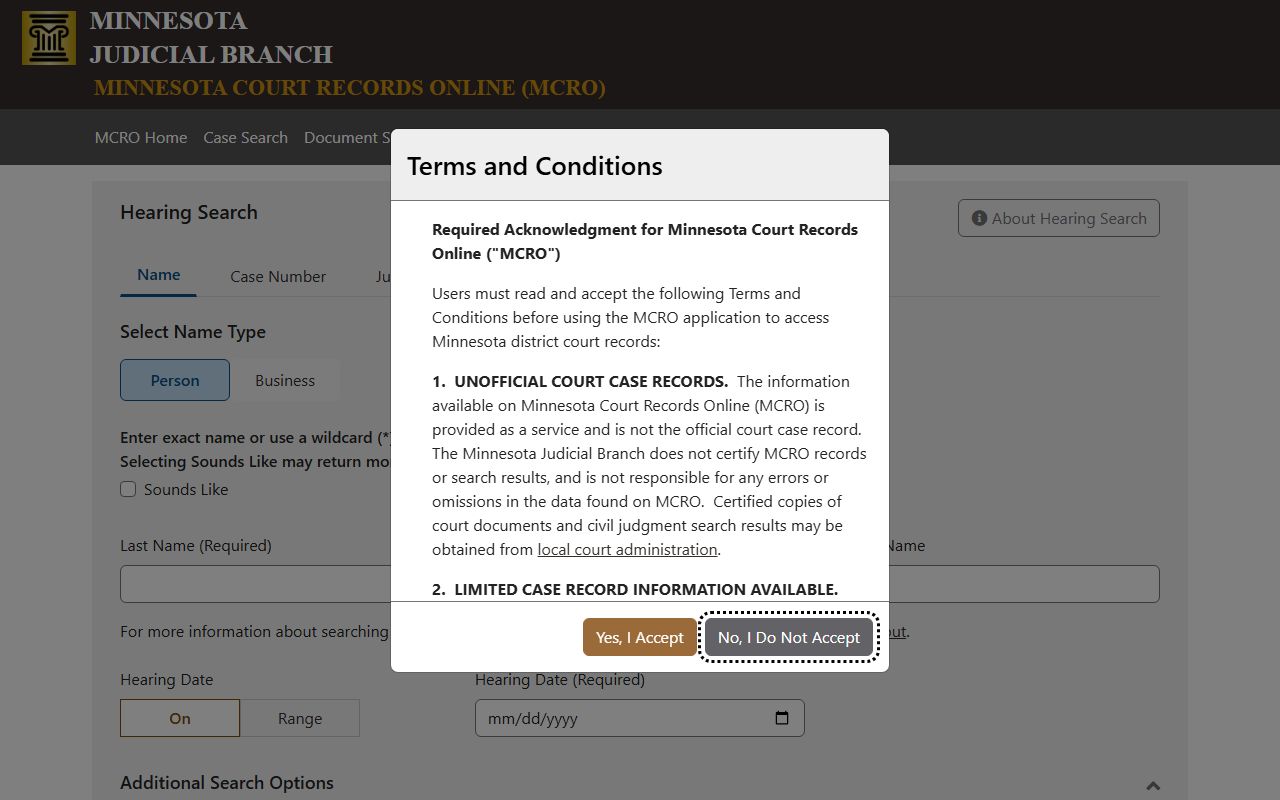
Hearing search is best for dates and settings, while case search is better for the full sequence of events in one file.
Sample Olmsted Docket Entry
The Olmsted daily calendar and MCRO hearing records use a field set that is more practical than formal. It helps a person confirm who is scheduled, where the matter is set, and what type of hearing is expected. Observed hearing types include arraignment, first appearance, pre-trial, review hearing, Jarvis hearing, commitment hearing, plea hearing, and probate hearing. Locations can include courtrooms such as 5B, 6D, and 6B, plus Zoom locations such as Zoom 5A.
| Field | What It Shows |
|---|---|
| Party Name | Name tied to the scheduled matter, when public. |
| Hearing Location | Courtroom, courthouse room, or Zoom location. |
| Hearing Date and Time | Date and time assigned for the event. |
| Judicial Officer | Judge or judicial officer assigned to the hearing. |
| Hearing Type | Event label such as arraignment, pre-trial, plea, review, or probate hearing. |
| Connection Type | In-person, remote, or other connection detail when listed. |
| Case Number | Minnesota case identifier, such as a 55-CR or 55-VB format. |
For money judgments, the MCRO Judgment Search tab functions as a docketed judgment lookup by debtor name.
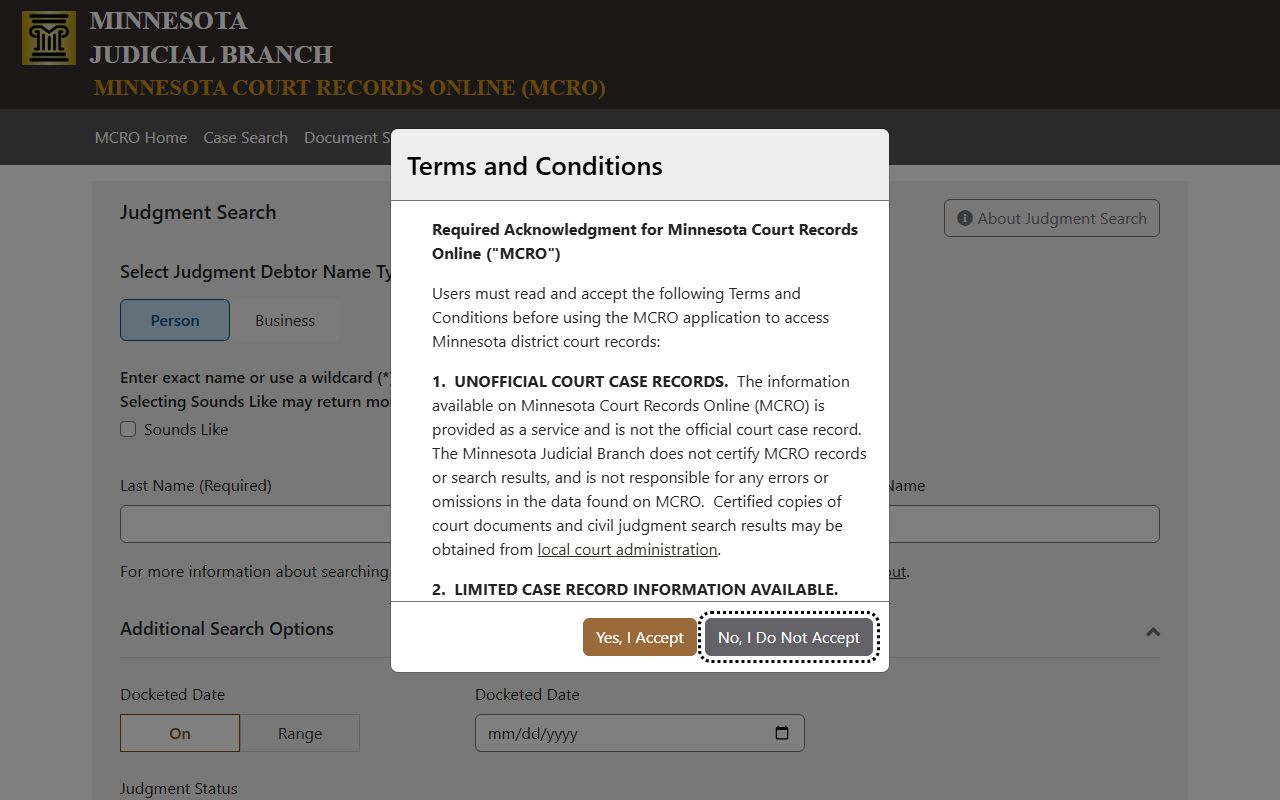
Judgment search is separate from a normal hearing calendar because it focuses on docketed money judgments and satisfactions.
Courts Publishing Olmsted Dockets
Olmsted County does not have separate county courts at law, justice courts, or a separate municipal court record system for the public to search. The local trial court is Olmsted County District Court, and its records feed MCRO. The court hears civil, family, probate, juvenile, criminal, and traffic cases. City attorney prosecution can affect the charging source for some lesser cases, but the docket itself is still District Court once filed.
- Olmsted County District Court publishes public case, hearing, document, and judgment information through MCRO.
- The local daily calendar PDF publishes next-day District Court activity for Olmsted County, subject to updates and exclusions.
- The Minnesota Court of Appeals handles appeals from District Court, but trial-level docket lookup starts with the county case.
- The Minnesota Supreme Court is the court of last resort and does not replace the District Court docket for local filings.
- Federal dockets are separate and use federal court systems, not Olmsted County District Court records.
Note: Third Judicial District Administration is an administrative office and does not hear Olmsted County cases itself.
Docket vs Case Record
The docket is useful for tracking status. A full case record is better for reading the substance. In a criminal case, the docket may show complaint filing, arraignment, pretrial, plea, disposition, and sentencing events. The full case file may include the complaint, orders, notices, and other documents if public. In a civil case, the docket may show service, motions, hearings, judgment, and satisfaction, while the full file may include pleadings and orders.
| Docket | Full Case Record | |
|---|---|---|
| Format | Event list or calendar entry. | Case details plus available filings and orders. |
| Best Use | Track hearings, status, and outcomes. | Read the legal filings and official case text. |
| Online Access | Often visible through MCRO or calendar tools. | Varies by case type, filing date, and remote-access rule. |
| Certified Copy | Not usually enough for legal proof. | Certified copies come from Court Administration. |
Minnesota Rule of Public Access 7 explains how court-record access requests are handled by the custodian.
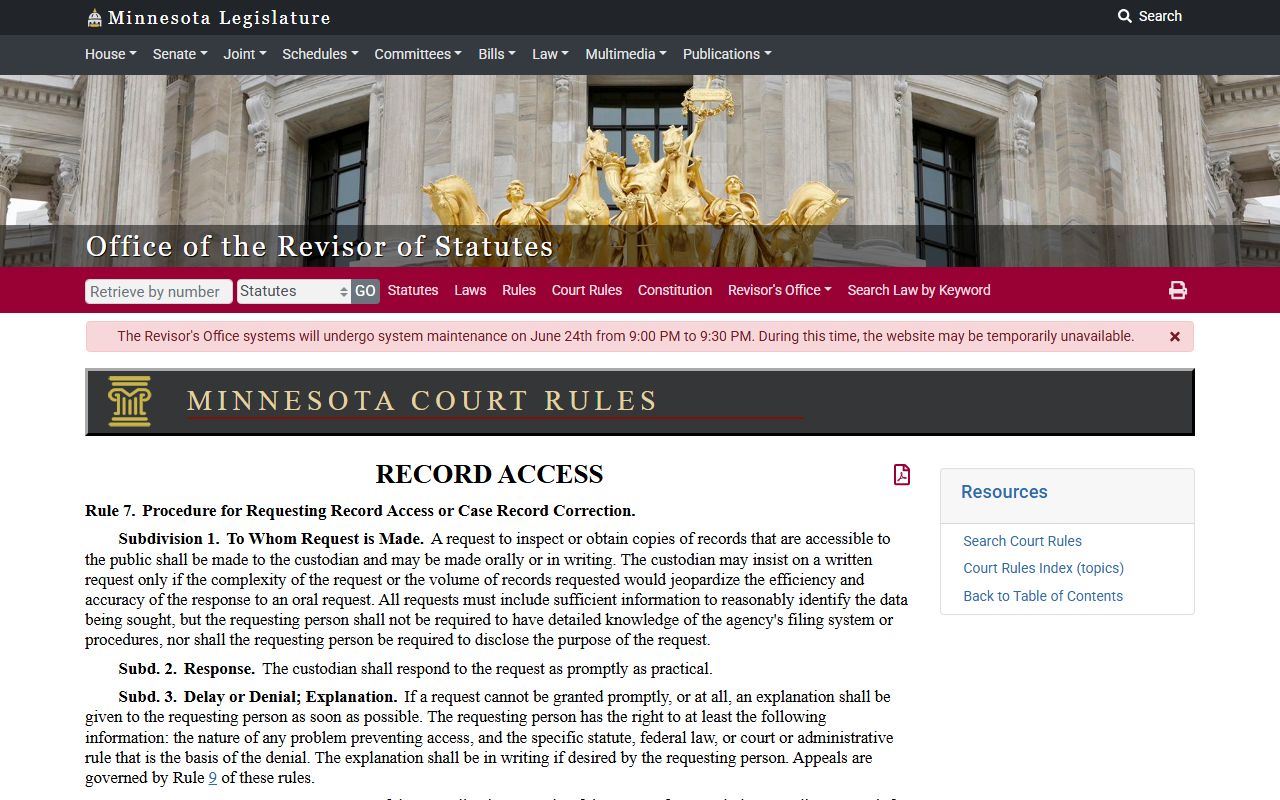
Rule 7 matters when a docket entry points to a document or file that must be requested instead of viewed online.
Read Olmsted County Dockets
Start with the case number. A number such as 55-CR-25-2649 uses county 55 for Olmsted, criminal case type, filing year 2025, and a sequence number. A number such as 55-VB-26-3815 points to a violation bureau or nonmandatory appearance case. Then read the event list from oldest to newest. Filing entries show what came into the court. Hearing entries show dates and court settings. Disposition entries show outcomes such as dismissal, conviction, judgment, or other court action.
Use plain meanings for common terms. A hearing is a court event before a judge or judicial officer. A motion is a written request for an order. A continuance is a postponement. A disposition is the outcome of a claim, charge, or case. A judgment is a final court decision, often a money judgment in civil cases. A satisfaction shows that a money judgment has been paid or resolved.
When an Olmsted County docket entry is unclear, the next step is to match the docket to the full case record. MCRO may show public documents for some cases, but older cases, expunged matters, restricted juvenile categories, protective-order cases, and some family or commitment materials may be missing from remote access. Court Administration can confirm whether a public record is available at the courthouse, whether a certified copy can be issued, and whether a case must be searched by number instead of name. For immediate schedule questions, the printed courthouse calendar remains the most current source because the online daily calendar can change during the court day.
The Minnesota Government Data Practices Act is relevant for county administrative data, not for rewriting court access rules.
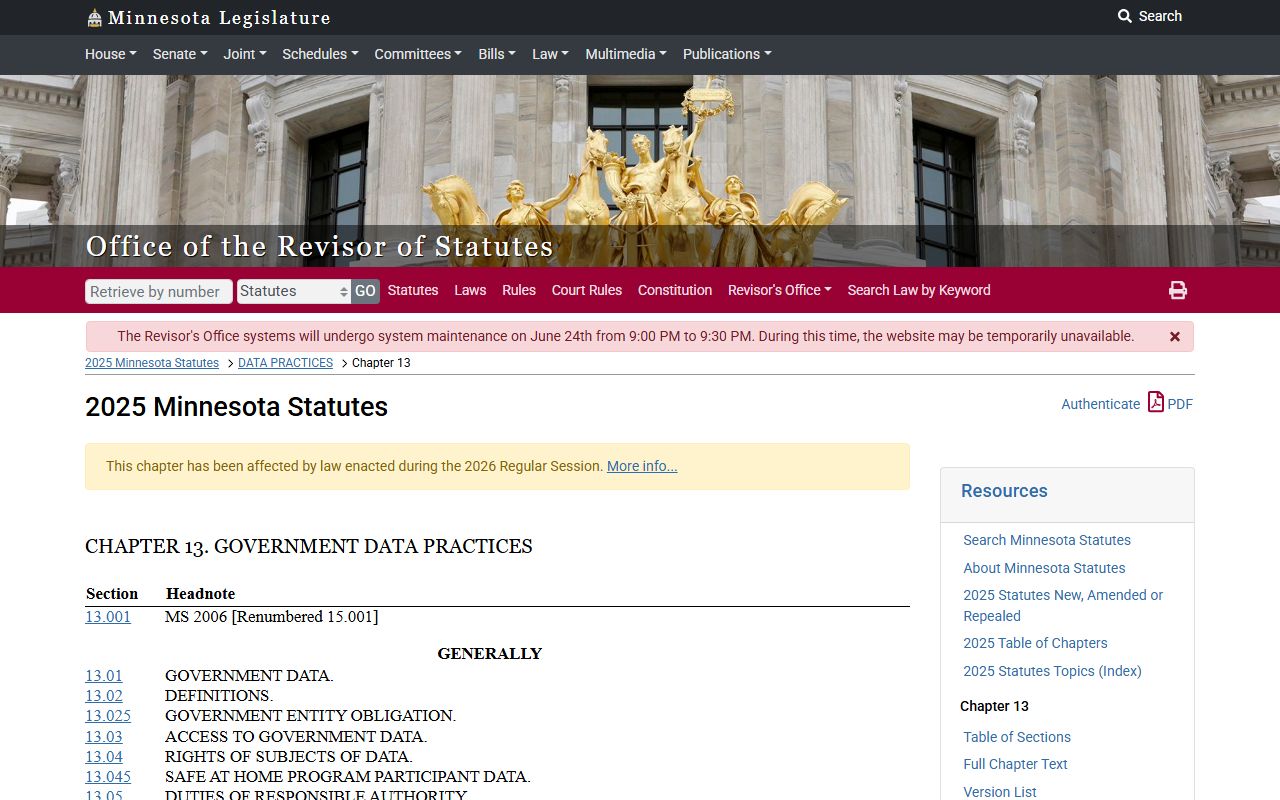
Use the county data request process for noncourt county records, but use Court Administration for District Court docket and case-copy questions.