
Olmsted Criminal Court Records
A criminal court record is the case file kept by the court after a prosecutor files a charge, complaint, citation, or related charging document. In Olmsted County, the local trial court is Olmsted County District Court. Court Administration handles local case processing and records-counter functions for District Court. Criminal files can include complaints, charge counts, offense levels, warrants flags, hearing entries, plea entries, motions, dispositions, sentencing, fines, fees, restitution, probation terms where public, and public documents that MCRO allows online.
Minnesota uses a unified District Court system. Olmsted County belongs to the Third Judicial District. The Olmsted County Attorney prosecutes felony crimes committed by adults in the county and some gross misdemeanors or misdemeanors. Rochester City Attorney and other city attorneys may prosecute some misdemeanor or ordinance matters, but the court case still routes through District Court once filed. For charge-level detail before outcome, use arrest records and court charges. For all case types, use Olmsted County court records.
Search Olmsted Criminal Cases
Use MCRO Case Search for public District Court criminal case records. Search by case number, citation number, attorney name, bar number, or party name where allowed. A key caveat applies to pending criminal, traffic, and petty misdemeanor matters: if there is no conviction, the case may not return through defendant-name search. Use the case number, citation number, attorney name, or bar number when available.
- Open MCRO Case Search and accept the public access terms.
- Select Olmsted as the court location for local criminal court records.
- Choose Criminal as the case category if using a broad search.
- Search by case number or citation number when a pending matter does not appear by defendant name.
- Open the case and review the Register of Actions, hearings, charges, disposition, sentence, financial fields, and documents.
For conviction-history checks, use the Minnesota Bureau of Criminal Apprehension Criminal History Search, not MCRO. The BCA system is separate from the court case file and is designed for Minnesota public criminal history data. For prison or supervision status, use the Minnesota DOC public offender viewer. For active local warrants, use the Sheriff's active warrants page or the dedicated Olmsted County warrant search. The Sheriff's Office processes and maintains warrant data, but criminal warrants are issued through District Court and must be signed by a judge.
Olmsted Criminal Case Flow
Criminal court records are easiest to read in order. A case can begin with an arrest, citation, warrant, complaint, or prosecutor-filed charge. The court record then shows what happened in District Court. Some cases end early with dismissal or diversion-type outcomes. Others move through pretrial hearings, motions, plea agreements, trial, disposition, and sentencing. The docket does not prove guilt by itself. It records the court events and the outcome entered by the court.
Case flow: Charges Filed › Arraignment › Pretrial / Motions › Plea or Trial › Disposition › Sentencing
| Stage | What Happens |
|---|---|
| Charges Filed | The prosecutor files a complaint, citation, information, indictment, or related charging document. |
| Arraignment | The defendant is advised of the charge and plea issues are addressed. |
| Pretrial / Motions | The parties appear for status, settlement, evidence, or legal motions. |
| Plea or Trial | The case resolves by plea, trial verdict, dismissal, or another court action. |
| Disposition | The court records the outcome of the charge or case. |
| Sentencing | For convictions, the sentence can include jail, prison, probation, fines, fees, restitution, or conditions. |
What Criminal Records Show
The court record shows the court case. It can show that a person was charged, what offense level was alleged, what hearings occurred, whether a plea was entered, and how each count ended. Case numbers usually begin with 55 for Olmsted County, followed by case-type letters such as CR for criminal. The Register of Actions is the timeline. It is the best place to confirm whether the case had arraignment, pretrial, review, plea, trial, sentencing, or other hearing events.
| Field | What It Shows |
|---|---|
| Case Number | County number, criminal case type, filing year, and sequence number. |
| Defendant | Person charged in the criminal case. |
| Charges | Offense descriptions, counts, and offense levels where public. |
| Attorneys | Defense counsel, prosecutor, or attorney identifiers where shown. |
| Hearings | Date, time, judicial officer, location, connection type, and hearing type. |
| Plea | Formal response to a charge, such as guilty or not guilty. |
| Disposition | Outcome such as conviction, dismissal, acquittal, or amended charge result. |
| Sentence | Jail, prison, probation, fines, restitution, fees, or other consequences when public. |
Minnesota chapter 609A governs expungement of criminal records.
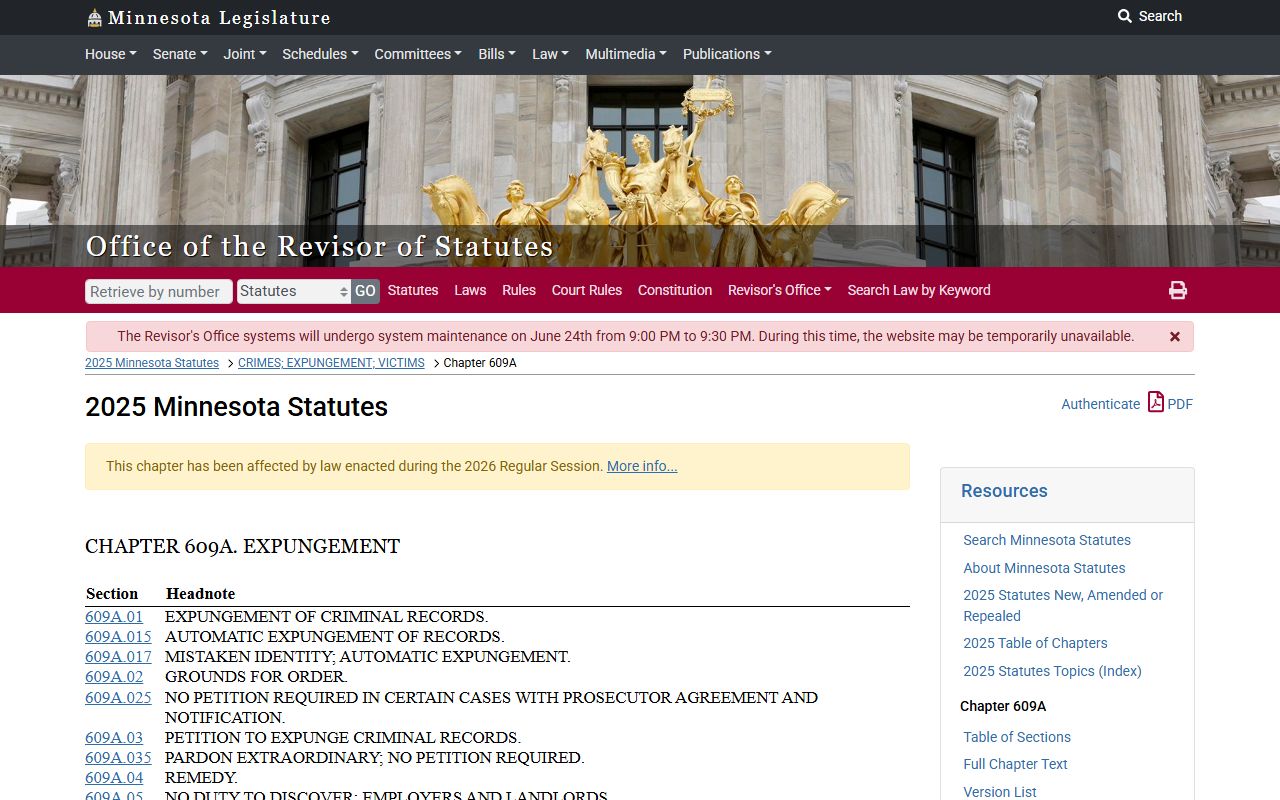
Expungement rules matter when a criminal court record cannot be found because it has been sealed from public view.
Charges vs Convictions
A charge is an accusation filed in court. A conviction is an outcome after a guilty plea, guilty verdict, or other conviction event. Olmsted County criminal court records can show charges that were amended, reduced, dismissed, or ended in acquittal. That is why the disposition field must be read count by count. A jail roster charge description or warrant summary is not the same as a final criminal court disposition.
| Charge | Conviction | |
|---|---|---|
| Meaning | Allegation filed by a prosecutor or citation process. | Court outcome finding guilt or accepting a guilty plea. |
| Timing | Appears near the start of a court case. | Appears after plea, trial, or other court resolution. |
| Record Use | Shows what was alleged, including counts later dismissed. | Shows the final criminal outcome for that count. |
| Best Source | MCRO case record and charging document. | MCRO disposition plus BCA conviction history when applicable. |
The BCA Criminal History Search is the statewide conviction-history system for public criminal history searches.
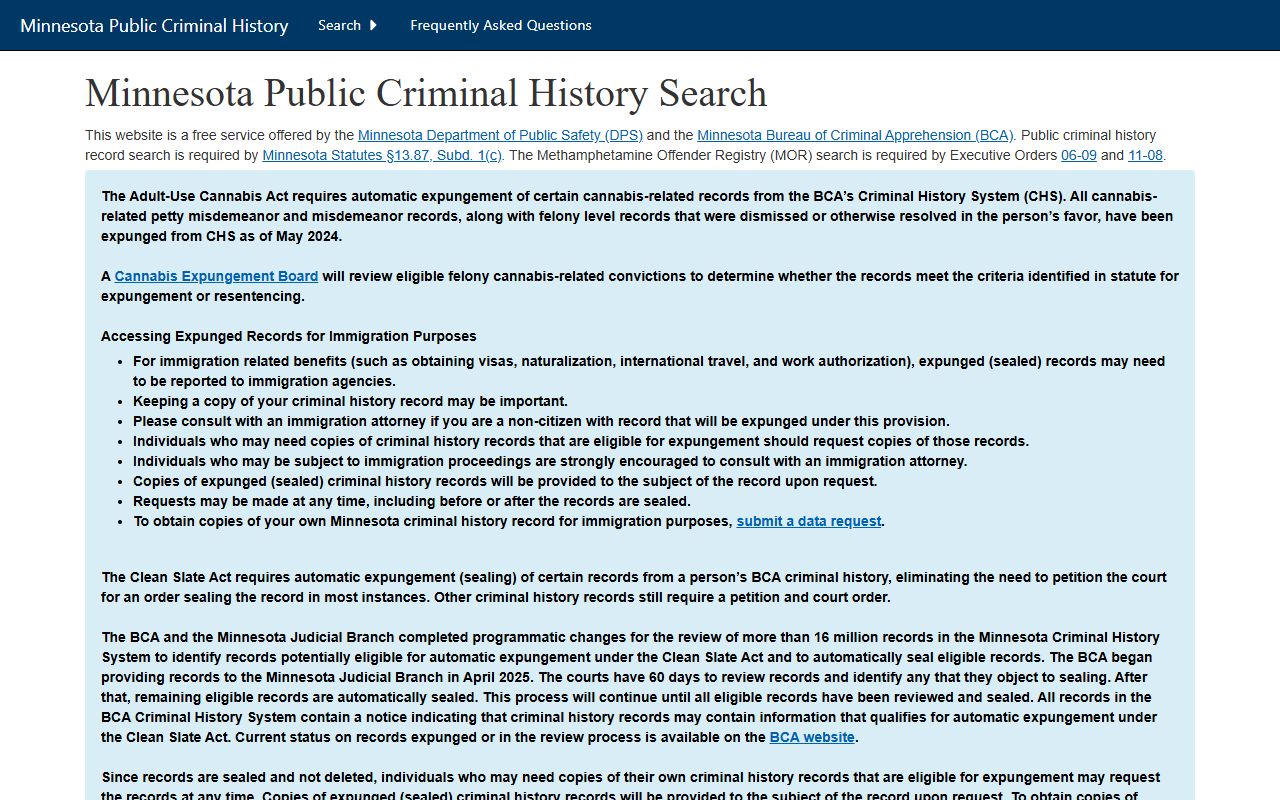
BCA history and MCRO answer different questions, so both may be relevant when checking a criminal matter carefully.
Olmsted Prosecutor and Defense
Minnesota counties use the title County Attorney rather than District Attorney. The Olmsted County Attorney prosecutes adult felony crimes committed in the county and lesser crimes in townships, plus juveniles regardless of offense seriousness. The criminal division reviews law-enforcement reports, files complaints, handles grand jury presentation when needed, appears in court hearings and trials, and makes sentencing recommendations.
The County Attorney Criminal Division lists county.attorney@olmstedcounty.gov, 507-328-7600, and 151 4th Street SE, Rochester. The office prosecutes crimes outside Rochester city limits and in contract cities such as Byron, Stewartville, Oronoco, Eyota, Dover, and parts of Chatfield and Pine Island. Rochester misdemeanors are often handled by the Rochester City Attorney. A person charged with a misdemeanor, gross misdemeanor, or felony with possible jail time may ask the court to appoint a public defender. The Third District Management Office of the Minnesota Board of Public Defense is at 206 South Broadway, Suite 500, Rochester, and lists 507-285-7370.
Note: The County Attorney cannot represent private citizens or give private legal advice.
Sealed and Expunged Records
Sealing and expungement affect public access to criminal court records. Minnesota expungement is controlled by chapter 609A, and many petitions use the procedure in section 609A.03. If granted, an expungement order seals qualifying records and bars public disclosure except under court order or statutory authority. It does not always erase every government use. Eligibility, waiting periods, and automatic-expungement rules depend on the offense and outcome.
| Sealed | Expunged | |
|---|---|---|
| Visibility | Hidden from general public access by rule or order. | Sealed under Minnesota criminal expungement law when granted. |
| Online Search | May not appear in MCRO. | Generally absent from public MCRO results after order processing. |
| Government Access | Can remain available to authorized agencies. | Can remain available under court order or statute. |
| Common Path | Rule, statute, or case-specific order. | Petition in the court that handled the case, unless automatic rules apply. |
Minnesota section 609A.03 covers the petition process for many criminal expungement requests.
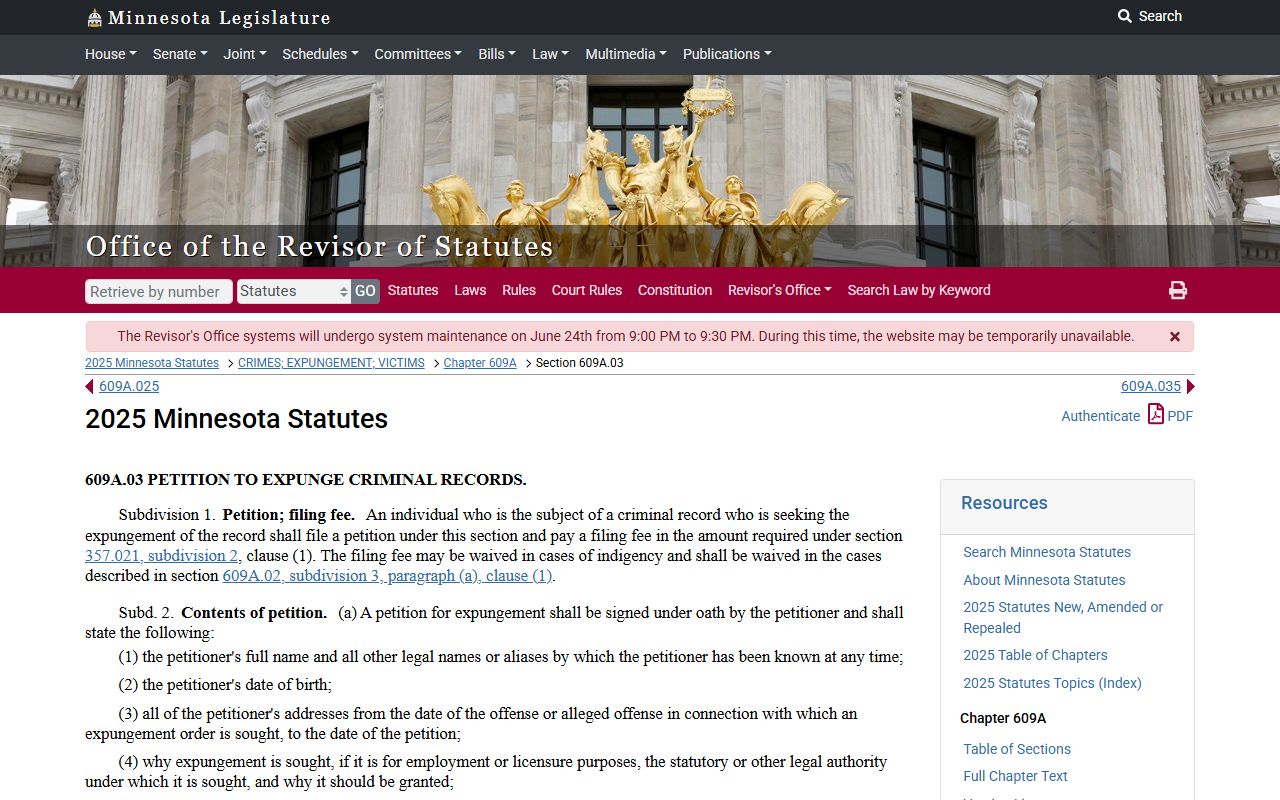
For an Olmsted County case, the filing venue is Olmsted County District Court when that court handled the criminal matter.
Criminal Record Access Rules
Public criminal court record access in Olmsted County is governed by the Minnesota Rules of Public Access, not by a county-only rule. Rule 2 provides the open-record presumption. Rule 4 lists inaccessible categories. Rule 8 controls remote access. These rules explain why some public court information can be viewed at a courthouse terminal while the same material is not available through the internet.
Key Access Rules:
Minn. R. Pub. Access 2 states the general court-record access presumption.
Minn. R. Pub. Access 8 limits remote access to some records and fields.
For criminal history rather than a court file, MCRO warns users to use the BCA Criminal History Search. BCA history is built for conviction-history searches and links criminal history by fingerprints. MCRO is a court access tool. It can include nonconviction events, dismissed counts, pending cases located by case number, and docket detail that a conviction-history search may not show.
Restricted Olmsted Criminal Records
Juvenile delinquency records are restricted under Minnesota section 260B.171. MCRO terms identify Juvenile Delinquency Felony 16 case types as not available through MCRO. Child protection, domestic abuse order for protection, harassment restraining order, public civil commitment documents, protected identifiers, and sealed or expunged cases also have limits. Redactions can remove Social Security numbers, financial account numbers, addresses, phone numbers, and details identifying victims, witnesses, or jurors.
Minnesota juvenile delinquency record law explains restricted juvenile access.
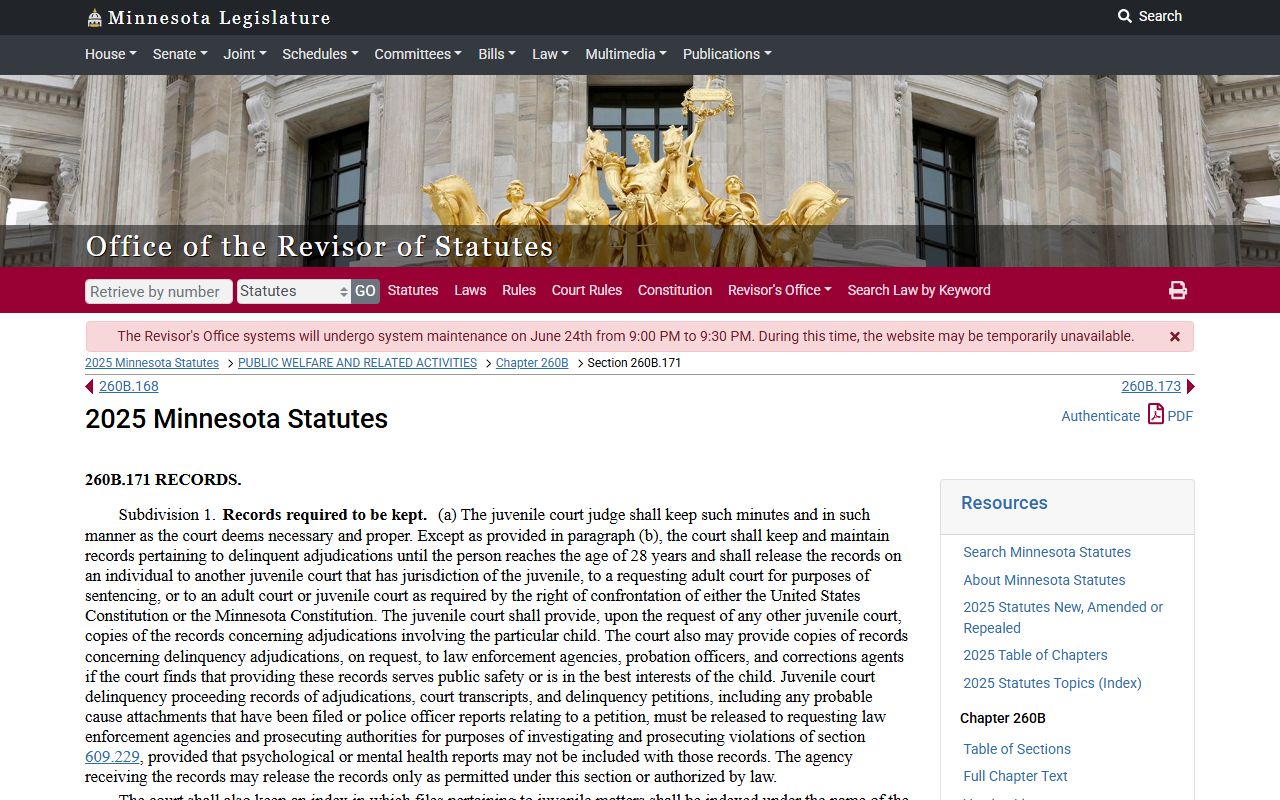
These limits are important because a missing online result does not always mean no case or record exists.
Custody and State Lookups
Criminal court records should not be confused with custody records. The Olmsted County inmate roster shows current Adult Detention Center status, booking information, incarceration reason, charge descriptions, and offense level where public. That roster warns that it should not be relied on for legal action. A court record is still needed to confirm the filed case, plea, disposition, and sentence.
The Minnesota DOC Public Viewer covers adults committed to the Commissioner of Corrections and still under DOC jurisdiction.
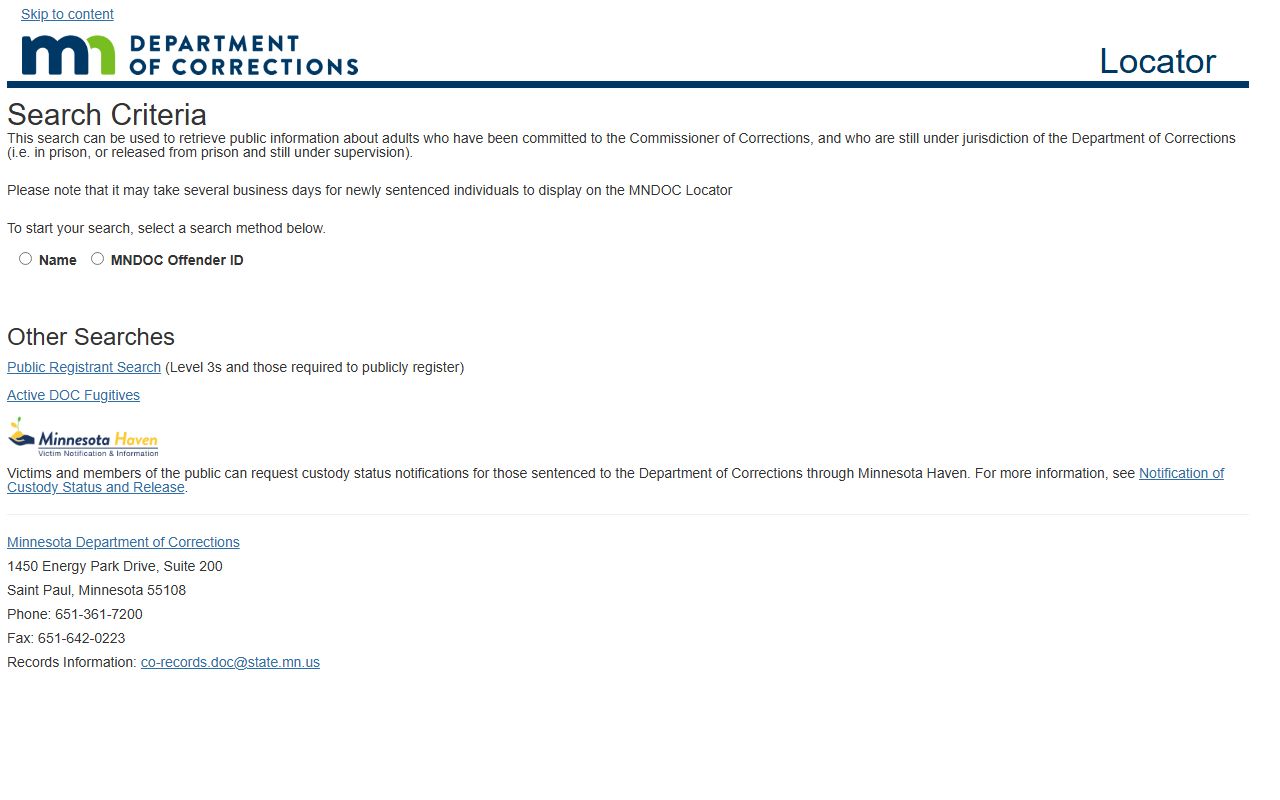
DOC records can help after sentencing, but they are not a substitute for the Olmsted County District Court case file.
The Minnesota DOC public registrant search is a separate tool for registrants subject to public notification.
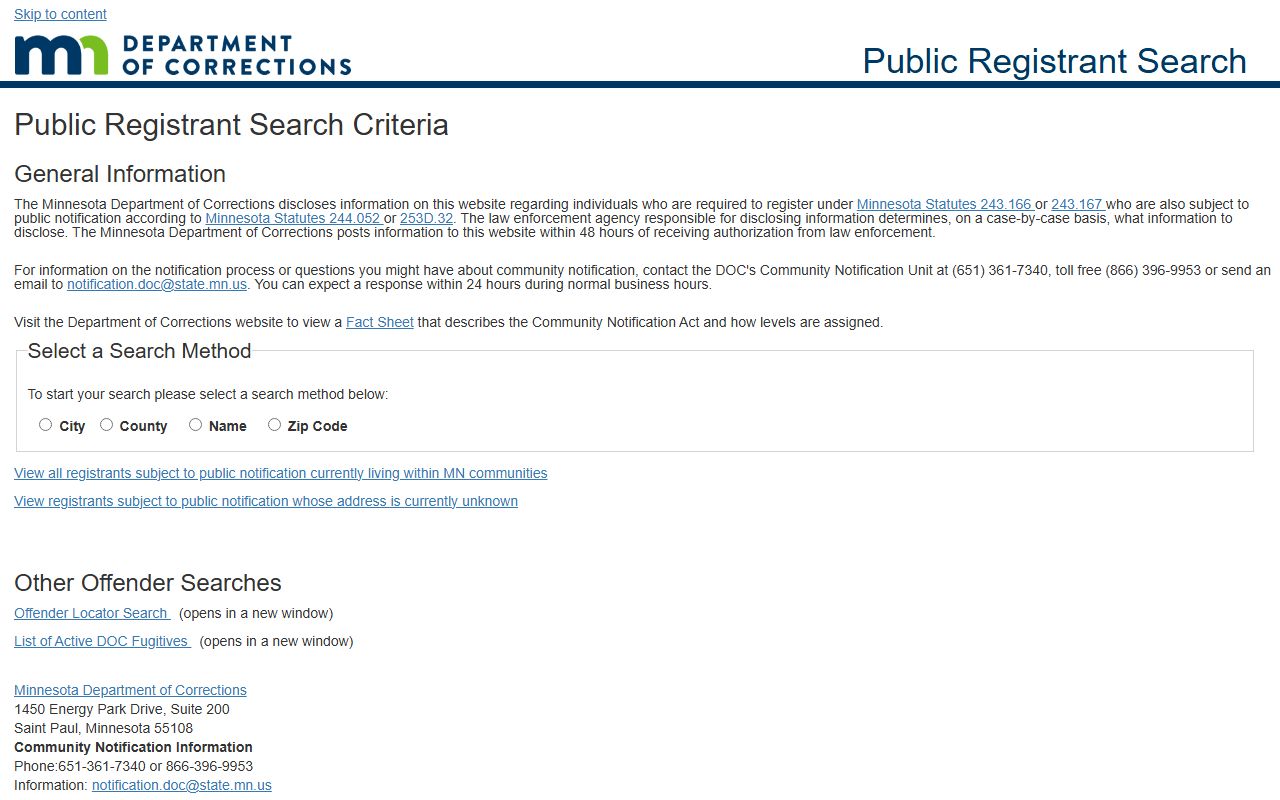
Registrant status, prison status, warrant status, jail custody, and District Court case status are separate record channels and should be checked in the right system.